

Read
Understand the starting point
We look at the player's club context, training load and live play. What happens before the ball arrives? Which options can the player see?
The Kairon Academy Method
What the coach observes, how training changes and how we explain progress to players and families.
See the six phases ↗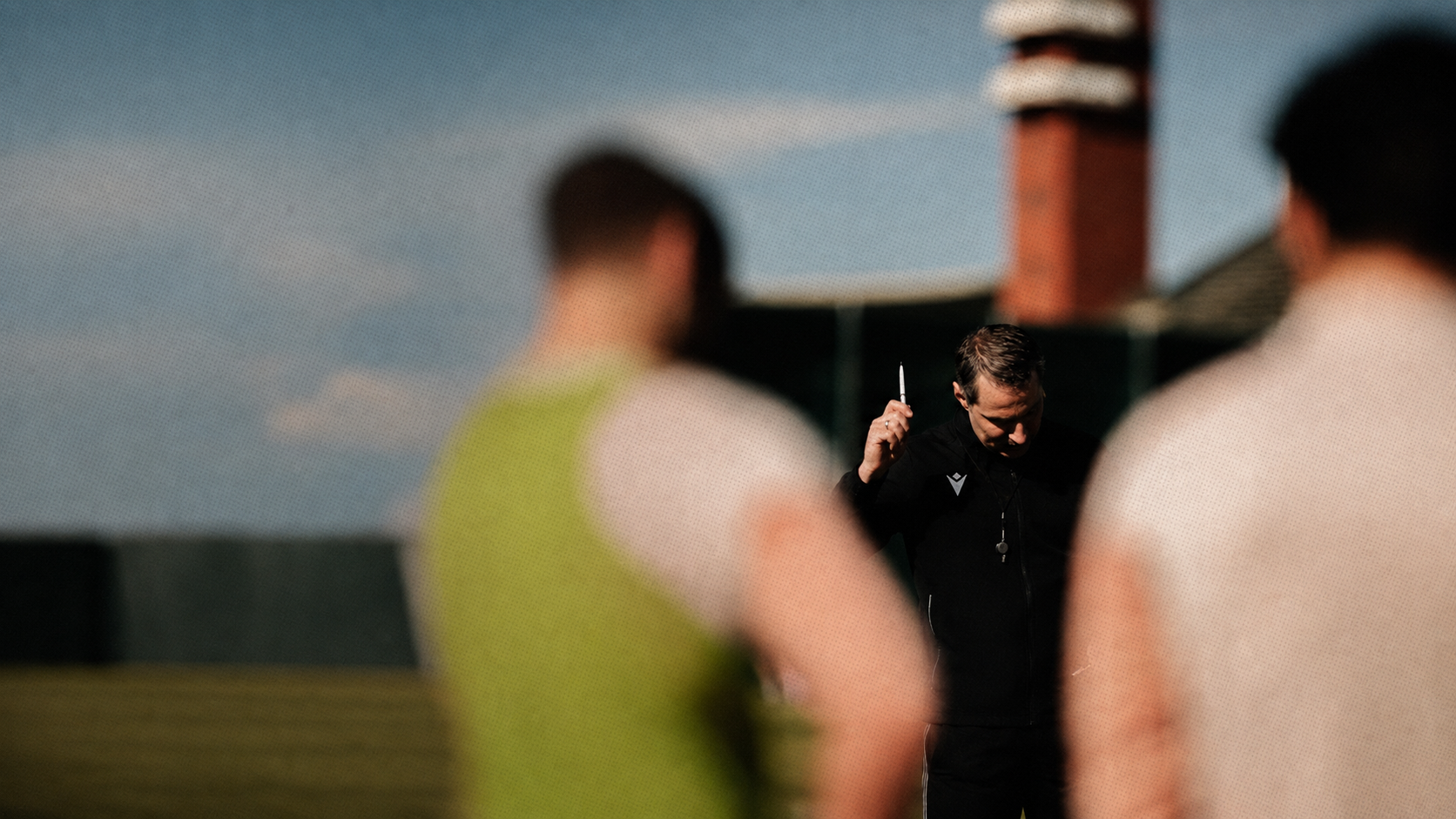
We follow a game situation through a cycle, rather than moving through a fixed list of drills.
Read
We look at the player's club context, training load and live play. What happens before the ball arrives? Which options can the player see?
How can I receive between lines and keep more than one option?
Illustrative example, not a result from a player or a prescribed technical answer.
Illustrative 4v3 setup. The ball marks the starting point. Positions are examples, not a prescribed sequence.
Look at the receiver's distance from both defenders and the two supporting teammates.
Look at the receiver's distance from both defenders and the two supporting teammates.
Adjust the gap between the defenders without removing the opposition.
Does the receiver keep more than one option when the pass becomes available?
The Player Passport records a behaviour in its context. These descriptions are not an overall grade or a comparison with other children.
Player Passport
The behaviour has not appeared in a relevant game situation yet. That does not mean the player cannot do it.
We have not yet seen an option stay available in this situation.
Illustrative entries, not a real player record or an automatic progression.
A clear goal agreed with their coach, game situations to work on it and feedback they can understand and use. The player identifies what is working, under which conditions and what still needs practice. Their Player Passport records observations from the cycle and the next focus, guiding the work and helping them test it again in the game.
No talent score, public ranking or promise of selection. Academy complements the club; it does not replace it.
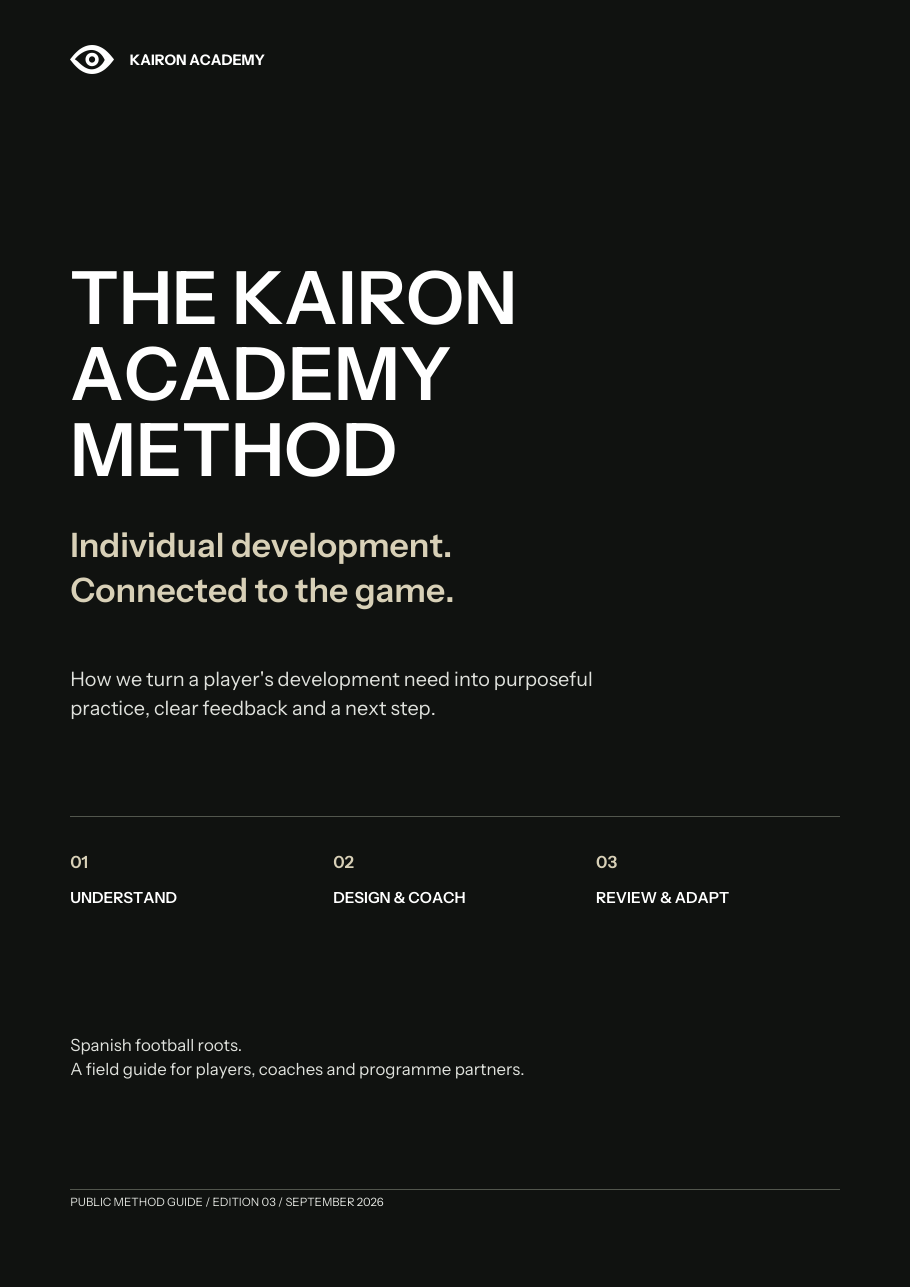
The PDF brings together the full method, working principles and references. Keep it or share it with a coach or club.
Open the PDF ↗Public field guide in English. Academy remains in development.
These sources inform the working principles. They do not establish results that KAIRON has not measured.